Follow Me On Social Media!

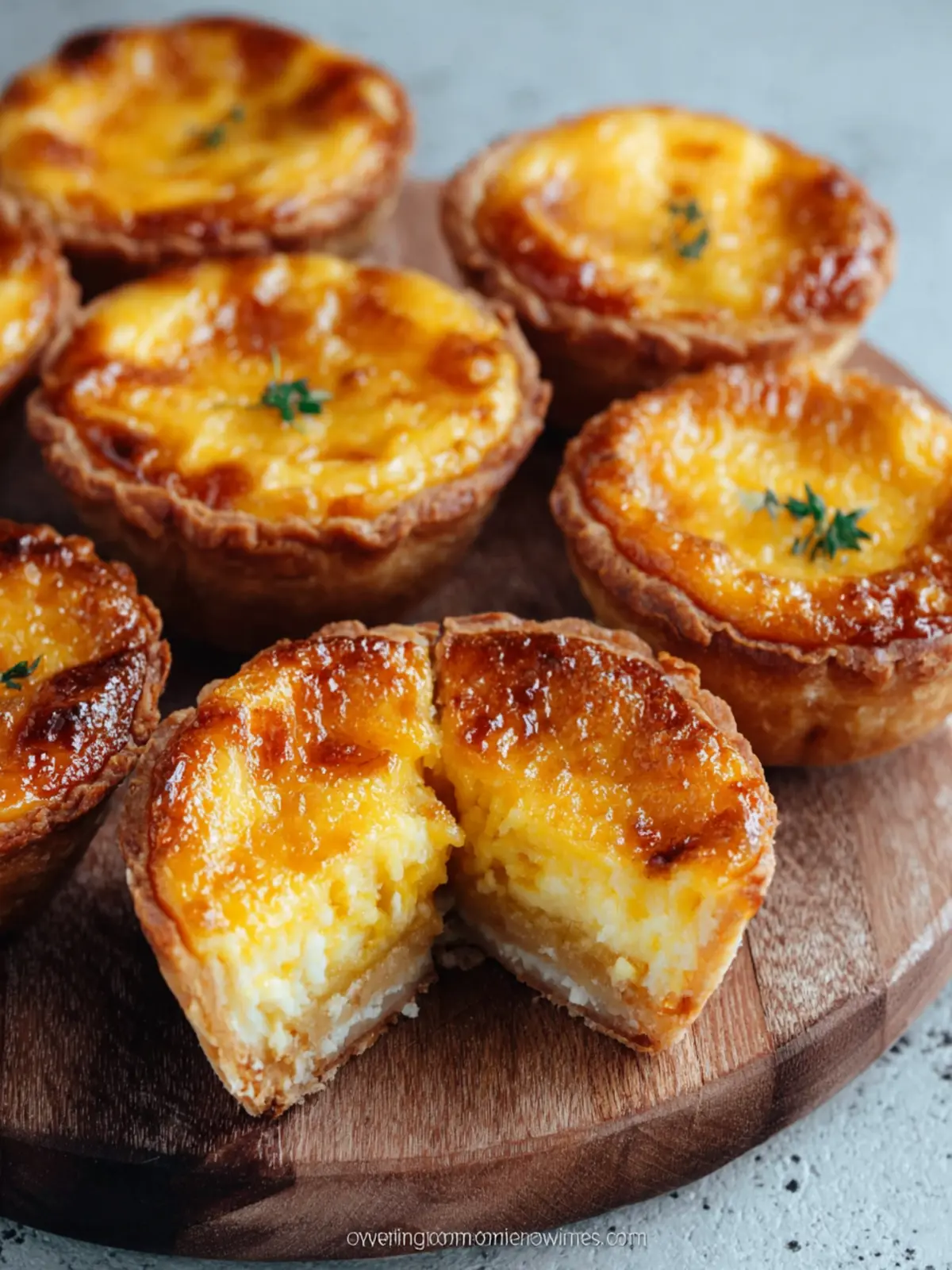
Portuguese Egg Tart: Indulgent Treat You Can’t Resist

Introduction to Portuguese Egg Tart
The delightful Portuguese Egg Tart carries a story that embodies the spirit of culinary exploration and cultural fusion. Born from the heart of Portugal and further embraced by the vibrant streets of Macau, this simple yet extraordinary dessert has captured the taste buds of many around the globe. Imagine a perfectly baked, crisp pastry shell cradling a creamy, sweet custard that dances harmoniously with hints of caramelized sugar on top. It’s not just a treat; it’s an experience that transports you to a quaint café in Lisbon or a bustling market in Asia, where the aromas of fresh pastries linger in the air.
What makes Portuguese Egg Tart so special?
So, what transforms a Portuguese Egg Tart from a mere dessert into a cherished favorite among dessert lovers? The answer lies in its enchanting blend of textures and flavors:
-
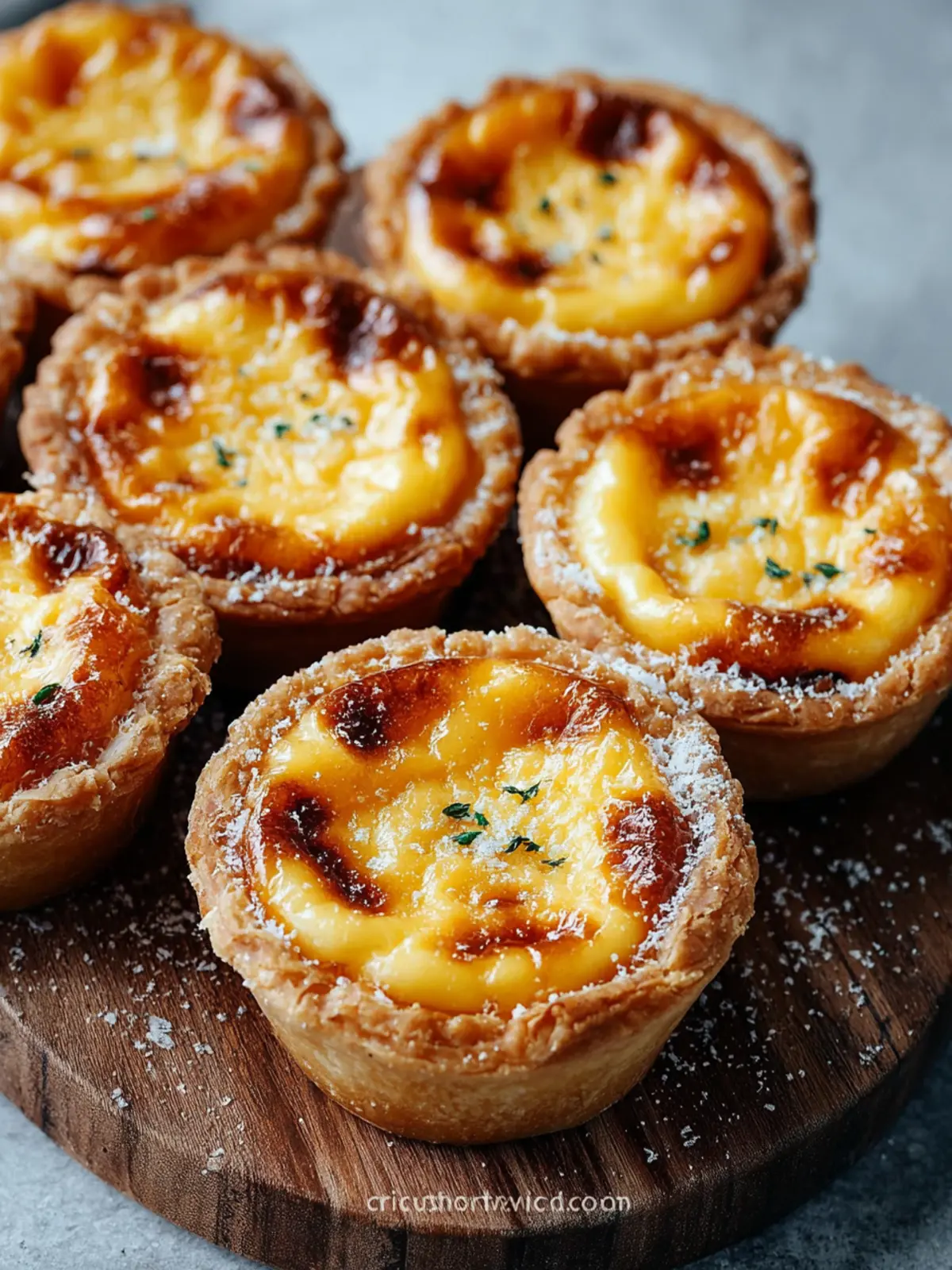
Creamy Custard: At the heart of every Portuguese Egg Tart is its velvety custard made primarily from egg yolks, sugar, and milk. This custard is lightly sweetened and has a rich flavor that pairs beautifully with the crispy tart shell.
-
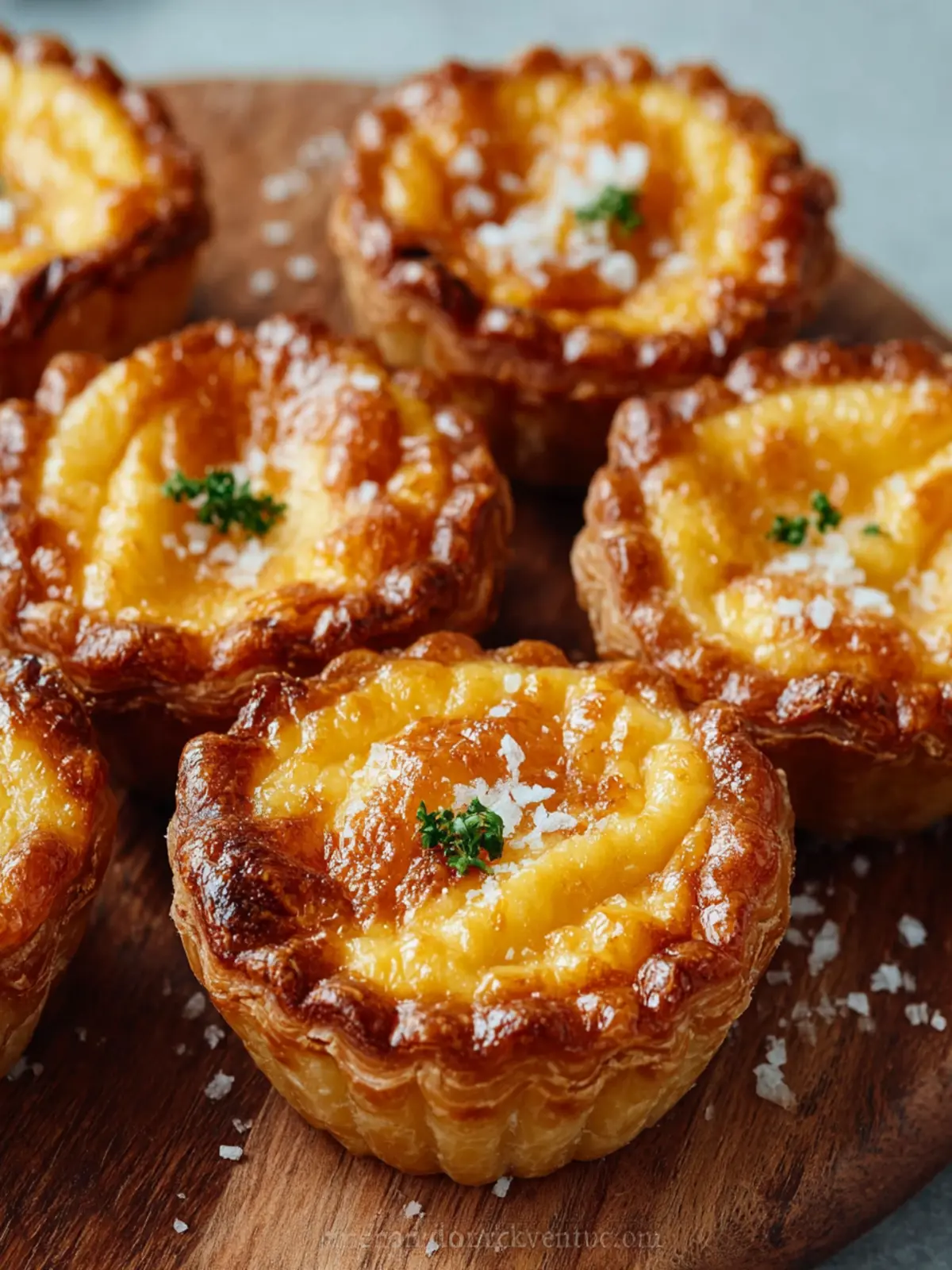
Flaky Pastry Shell: The pastry crust is a masterpiece in itself. It’s often made with a flaky, buttery texture that crisps up perfectly during baking, providing the ideal contrast to the creaminess of the custard.
-
Caramelized Finish: One of the distinguishing features of the Portuguese Egg Tart is its caramelized top. A kiss of direct heat during baking creates a slightly charred sugar crust that adds complexity to every bite.
-
Cultural Heritage: The tart’s historical roots are steeped in Portuguese tradition, traveling across time and geography, from the monasteries of Portugal to the streets of Macau. It embodies a blend of cultures, making each bite not only delicious but also a pathway to a rich gastronomical heritage.
Whether you enjoy it as an afternoon treat or a sweet finish to dinner, Portuguese Egg Tarts invite you to take a moment to savor life’s little pleasures. Are you ready to fall in love with these little custard wonders?
Key Ingredients for Portuguese Egg Tart
Flour and Butter: Essential for a Flaky Crust
The foundation of your Portuguese Egg Tart is a delectable crust made from high-quality flour and rich butter. Using all-purpose flour helps create that tender, flaky layer we adore. And don’t skimp on the butter; its richness contributes to the crust’s flavor and texture. For an ultra-flaky crust, try using a blend of cold butter and a little bit of lard if you’re feeling adventurous!
Milk and Eggs: Creating the Perfect Custard
When crafting the creamy custard filling, whole milk and fresh eggs are your best friends. Whole milk provides a velvety texture, while eggs bring that essential richness and color. You’ll want to use large eggs for the best results; they contribute the perfect balance of flavor and consistency to ensure your Portuguese Egg Tart is both custardy and set perfectly once baked.
Sugar and Lemon: Adding Balance and Brightness
To achieve the right sweet-tart balance, granulated sugar is a must for the custard base, while a hint of lemon zest brightens the flavor without overwhelming it. This delightful combination elevates your Portuguese Egg Tart, ensuring every bite feels sunny and balanced, inviting yet sophisticated. Consider the zest your secret weapon for elevating the overall taste profile!
Why You’ll Love This Portuguese Egg Tart
The moment you take a bite of a Portuguese Egg Tart, you are transported to Lisbon’s quaint streets, where the golden sun shines on pastries as deliciously tempting as they are rich in history. These delightful tarts boast a creamy custard filling nestled within a flaky crust, making them a beloved treat both locally and around the globe.
A Perfect Balance of Textures and Flavors
One of the reasons you’ll adore this Portuguese Egg Tart is its incredible contrast of textures. The crispy, buttery crust gives way to a smooth, velvety custard that dances on your palate. With every bite, the slight sweetness of the filling harmonizes beautifully with a hint of nutmeg and vanilla, creating a flavor profile that tantalizes your taste buds.
Easy to Make and Irresistibly Satisfying
Don’t be daunted by the elegant appearance of this tart. It’s surprisingly simple to whip up, making it a great dessert option for gatherings or a cozy night in. Plus, the feeling of baking this classic dish fills your kitchen with incredible aromas—trust me, your friends and family will be flocking to the kitchen when they catch a whiff!
Once you try it, there’s a good chance this Portuguese Egg Tart will become a new favorite in your baking repertoire. Enjoy the journey of creating this little slice of Portugal right in your home!
Tips for Making Perfect Portuguese Egg Tart
Crafting the ideal Portuguese Egg Tart is a delightful journey that combines rich flavors with a delicate texture. As someone who has perfected the art of these tarts, I can assure you that a few simple tips can elevate your baking game.
Choose Quality Ingredients
- Eggs: Use the freshest eggs you can find. The yolks should be deep, vibrant yellow for that classic custard look and flavor.
- Milk and Cream: Opt for whole milk and heavy cream. This combination offers a luscious, creamy consistency that enhances the overall richness of the filling.
Perfecting the Crust
- Dough: The key to a flaky yet sturdy crust is to keep your ingredients cold. Chill your butter and water before mixing to achieve that necessary flakiness.
- Rolling Technique: When rolling out the dough, rotate it frequently to maintain an even thickness. This prevents uneven cooking and ensures that every bite is perfectly tender.
Baking Tips for Custard Consistency
- Temperature Awareness: Preheat your oven adequately. A hot oven helps the custard to set correctly while also caramelizing the top.
- Cooling Options: Once baked, let the tarts cool slightly before removing them from the pans. This will keep the delicate custard intact.
With a focus on these details, your journey to making an exquisite Portuguese Egg Tart will be both enjoyable and rewarding.
Variations on Portuguese Egg Tart
Exploring the world of Portuguese Egg Tart opens the door to a delightful array of flavors and presentations that can elevate this classic dessert.
Different Flavor Profiles
Why stick to the traditional when you can expand your palate? Consider adding ingredients like:
- Matcha Powder: This gives your Portuguese Egg Tart a vibrant green color and a subtle earthy flavor.
- Lemon Zest: A touch of citrus brings a bright, refreshing element to the rich custard.
- Coconut Milk: For a tropical twist, substitute part of the cream with coconut milk, offering a creamy texture and unique flavor profile.
These variations not only make the tart visually appealing but also enrich the overall tasting experience.
Alternative Serving Options
Presentation can take your Portuguese Egg Tart to the next level. Here are some fun ideas:
- Dusted with Cinnamon: A sprinkle of cinnamon on top adds warmth and depth, making it even more enticing.
- Berry Toppings: Fresh berries or a berry compote add a burst of color and tartness that complements the sweet custard.
- Mini Tarts: Create smaller versions for individual servings at parties – perfect for sharing and showcasing your creativity.
By mixing up flavor profiles and serving options, you can give your Portuguese Egg Tart a unique twist that delights any audience.

Time Details for Portuguese Egg Tart
When you decide to whip up a delightful Portuguese Egg Tart, understanding the timings can make all the difference in achieving that perfect custard-filled pastry.
Preparation time
The preparation time for this recipe is about 30 minutes. Make sure to gather all your ingredients and have everything prepped so you can enjoy the process without any rush.
Baking time
Once your tarts are ready, they need to bake for approximately 20 minutes. Keep an eye on them as they turn a beautiful golden-brown, signaling that they’re perfectly cooked.
Total time
In total, you’ll spend around 50 minutes making these delicious Portuguese Egg Tarts from start to finish. With your time well-managed, you can savor each delicious bite once they come out of the oven!
Nutritional Information for Portuguese Egg Tart
Discovering the flavors of a Portuguese Egg Tart is not just about the delightful taste; it’s also about understanding what goes into this beloved pastry. Here’s a quick look at the nutritional information to keep your indulgence well-rounded.
Calories
A single serving of Portuguese Egg Tart contains approximately 200 calories. While it’s a delicious dessert, being mindful of the calorie count allows you to enjoy them as an occasional treat.
Protein
Each tart packs about 5 grams of protein, thanks to the eggs and milk used in the filling. This little boost of protein helps to satisfy your sweet cravings while adding some nutritional benefit.
Sodium
With around 80 milligrams of sodium per tart, it’s low enough to fit into a balanced diet. Just keep in mind how this fits into your overall daily intake if you’re watching your sodium levels.
Enjoy this treat guilt-free, knowing a bit more about its nutritional profile!
FAQs about Portuguese Egg Tart
The delectable Portuguese Egg Tart has found its way into the hearts and stomachs of many, often evoking memories of quaint bakeries in Lisbon. Here are some commonly asked questions about this beloved treat.
What’s the secret for flaky pastry?
Creating the perfect flaky pastry for your Portuguese Egg Tart is all about technique and timing. Using cold ingredients is crucial—start with cold butter and cold water to create that delightful flakiness. When incorporating the butter into the flour, aim for small, pea-sized pieces; this ensures pockets of air that will expand during baking, giving you that sought-after crunch. Additionally, chilling the dough for at least 30 minutes before rolling helps keep it firm, making your pastry even flakier when baked.
How to get the custard creamy but not runny?
Achieving the perfect custard consistency for your Portuguese Egg Tart involves careful temperature control and ingredient balance. Begin by gently heating the milk and cream without bringing them to a boil; aim for a simmer. When mixing the eggs, ensure they’re fully beaten, then gradually blend them with the warm milk mixture. This tempers the eggs, preventing them from scrambling. Lastly, straining the mixture through a fine mesh sieve removes any undesirable lumps, resulting in a silky smooth custard that’s creamy but never runny.
Can I freeze Portuguese Egg Tart?
Absolutely! Freezing your Portuguese Egg Tart is an excellent way to preserve leftovers. To freeze, allow the tarts to cool completely before wrapping them tightly in plastic wrap and then placing them in an airtight container. They can be frozen for up to three months. When you’re ready to enjoy, simply thaw them in the refrigerator overnight and reheat in a preheated oven to regain that lovely crispness. You’re just a gentle warm-up away from enjoying that fresh-out-of-the-oven delight!
Conclusion on Portuguese Egg Tart
Creating a Portuguese Egg Tart is more than just following a recipe; it’s about embracing a slice of culture and tradition. With its delicate, flaky crust and luscious custard filling, this dessert evokes the sun-soaked streets of Lisbon with every bite.
By mastering this recipe, you’re not just delighting your taste buds but also learning a cherished culinary skill. Serve these tarts warm, and watch them disappear at gatherings or cozy nights in. There’s something special about sharing delicious treats with friends and family; it sparks joy and connection. So, roll up your sleeves, gather your ingredients, and let the magic of Portuguese Egg Tart fill your kitchen with warmth and flavor!
Print
Egg Tarts
- Total Time: 1 hour 15 minutes
- Yield: 10 tarts 1x
Description
Delicious homemade egg tarts with a crispy crust and smooth custard filling.
Ingredients
Scale
- 215 g (1 1/3 cups) all-purpose flour
- 1/4 teaspoon salt
- 150 g (1/2 cup + 2 tablespoons) water
- 1 stick (113 g) unsalted butter, very softened
- 40 g (1/3 cup) all-purpose flour
- 1/2 teaspoon salt
- 1 cup (240 ml) milk
- 5 egg yolks
- Peels of 1 lemon (or 1 teaspoon lemon extract)
- 2 cinnamon sticks (or 1/4 teaspoon ground cinnamon)
- 140 g (1/2 cup + 2 tablespoons) sugar
- 57 g (1/4 cup) water
Instructions
- Add the flour and salt into a medium-sized bowl and stir to mix well. Pour in the water. Mix with a spatula until the water has fully incorporated and a dough starts to form.
- Lightly dust a clean work surface. Turn the dough onto the surface. Knead briefly, 5 minutes or so, until it forms a ball with a slightly coarse surface. Place the dough back into the bowl and cover with plastic wrap or a damp towel. Let rest for 15 minutes. The dough will become smooth and very sticky.
- Dust the working surface with flour again. Turn the dough onto the surface. Gently shape the dough into a ball without kneading (to avoid developing gluten). Then roll the dough into a thin large rectangle sheet, about 1/8” thick.
- Using a small offset spatula, spread 1/3 of the butter all over the surface of the dough, leaving a 1” border at the edges. It’s okay if there’s a few small tears at this step, or if the butter doesn’t spread perfectly evenly.
- Fold the bottom third of the dough up to cover the middle third, and then fold the remaining top third down so it covers the first folded part. Rotate the dough 90°, adding more flour as necessary to avoid sticking.
- Repeat rolling and folding process a second time. If at any point there is excess flour on the top of the dough before adding butter, brush off lightly with a pastry brush.
- Turn the folded dough another 90°, and repeat this one more time with the last third of the butter.
- With the long side of the dough facing you, roll the sheet once again into a rectangle, about 1/8” thick. Trim 1/2” from all edges to even the sides of the dough.
- Roll dough away from you, into a log, and then gently shape it with your hands to even it out.
- Cut the log in half with a sharp knife, and wrap both halves in plastic. Refrigerate for 2 hours, or freeze for 1 hour, until firm.
- Combine the sugar, water, lemon peel, and cinnamon stick in a saucepan. Bring to boil for 1 minute, and remove from heat to cool. If using lemon extract and ground cinnamon, this can be added once the syrup is removed from heat.
- In another medium-sized saucepan, add the flour, milk, and salt. Cook over medium heat, whisking constantly until thickened, 3 minutes or so. Set aside to cool for at least 10 minutes.
- Once the flour milk paste mixture has cooled off, place a small strainer over the pot. Pour in the syrup over the strainer, then discard the lemon peels and cinnamon. Whisk to mix the syrup.
- Add the egg yolk and whisk again, until evenly incorporated.
- Place a small strainer over a large measuring cup or a bowl with a pouring spout. Pour the custard mixture through the strainer. Use a spatula to push any residual pieces through the strainer. You might want to repeat this step to get a more smooth and even mixture.
- Preheat the oven to 425°F (218°C). Cut each dough log into 1 1/4” (3 cm) pieces, creating 10 pieces in total.
- Dip the cut ends of pieces in flour to lightly coat, and with the cut side facing up. Press then roll it with a rolling pin to form an even circle, about 3” (7 ) inches in diameter. Firmly press the dough into an un-greased muffin tin, smooth and press it from the bottom to the top, until the dough reaches just over the top edges. Repeat with the remaining dough pieces.
- Fill the pressed dough pieces about 3/4 full with the custard.
- Bake at 425°F (218°C) for 15 to 20 minutes, rotating halfway through, until custard is set and pastry is light brown on edges. Turn the oven up to 500°F (260°C) and continue baking for 5 more minutes, until the pastry is golden brown and the custard has dark, blistered patches. Note, depending on the location of your oven’s heating element, the custard might not brown evenly. To achieve the best char result, you might need to use a blowtorch after baking the egg tarts.
- Once the egg tarts are cooked, transfer the muffin tin to a cooling rack. Allow to cool a bit before removing the egg tarts. Enjoy the tarts still warm or at room temperature.
- (Optional) You can sprinkle the egg tarts with a mixture of 1 tablespoon granulated sugar + 1 teaspoon ground cinnamon as garnish.
- Store the egg tarts in an airtight container in the fridge for 3 to 4 days. Reheat in a 400°F (200°C) oven for 5 to 10 minutes, to slightly warm up the tarts before serving. Do not freeze the egg tarts.
Notes
- For best flavor, use fresh lemons for the peel.
- Egg tarts are best served warm or at room temperature.
- You can use a blowtorch to achieve a nice char on the custard if desired.
- Prep Time: 45 minutes
- Cook Time: 30 minutes
- Category: Dessert
- Method: Bake
- Cuisine: Chinese
Nutrition
- Serving Size: 1 tart
- Calories: 200
- Sugar: 12 g
- Sodium: 100 mg
- Fat: 10 g
- Saturated Fat: 6 g
- Unsaturated Fat: 4 g
- Trans Fat: 0 g
- Carbohydrates: 24 g
- Fiber: 1 g
- Protein: 3 g
- Cholesterol: 80 mg